Description
Probably the best known of all fine stones, amethyst is a quartz that owes its captivating purple to traces of iron. Its cousin citrine is often found in the same deposits; a mix of the two is called ametrine. Amethyst looks best in daylight rather than artificial light, especially at sunrise and sunset.
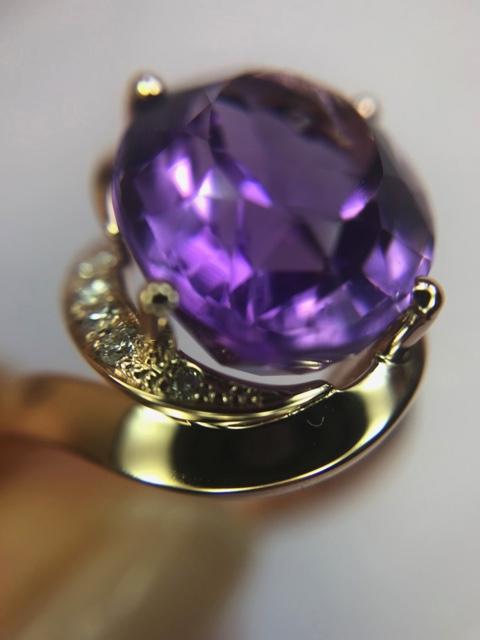
MEANING and history
With its royal purple, it is considered “the religious stone par excellence”. In the Bible, it is one of the stones on the breastplate of the high priest Aaron and one of the foundations of the heavenly Jerusalem. It adorned bishops’ rings and features in the British Crown Jewels.
Rare in Antiquity, it only became widely available in the early 20th century, when large deposits were found in Brazil and Uruguay. Leonardo da Vinci is said to have valued it for dispelling negative thoughts and aiding concentration.
In Hebrew, its name ahlama is linked to dreams: dreaming of an amethyst is considered a very good omen.
OriginS
South America, India and Africa; Brazil is the leading producer. In Bolivia, amethyst and citrine occur in the same crystal: ametrine, half purple, half yellow.
Hardness & Care
7 on the Mohs scale: suitable for everyday rings, though it may show wear over time and need repolishing. Store it away from rubies, sapphires and diamonds. Strong heat can remove its colour, and some amethysts fade under prolonged intense light: not a stone for the beach. Clean with a soft brush and mild soap; ultrasonic cleaning is fine, steam is not.
Virtues
Traditionally, amethyst purifies places and people. A geode or a few stones in a room are said to bring peace and calm; it is associated with positive energy.
The ideal metal
Amethyst suits both warm and cool tones: white, rose or yellow gold, or platinum.