Description
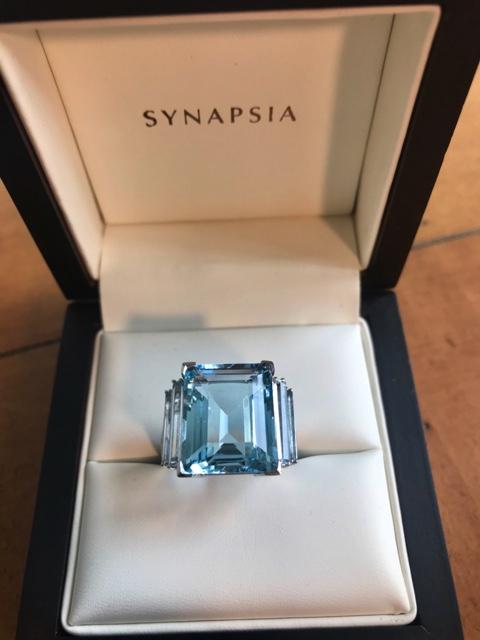
Aquamarine belongs to the prestigious beryl family, which also includes goshenite (colourless), morganite (pink), heliodor (yellow) and emerald (green). It owes its blue-green to blue colour to traces of iron.
Meaning and history
Its name comes from the Latin aqua marina, “sea water”, after its colour; the current name dates from the 16th century. Sailors wore it as a talisman against the perils of the sea, hence its nickname “the sailor’s stone”. For the Sumerians and Egyptians, it symbolised eternal youth. It remains a major stone in fine jewelry today.
OriginS
Brazil (the largest crystals come from Minas Gerais), Pakistan, Australia, Asia (Burma, China, India, Sri Lanka), Africa (Kenya, Madagascar, Mozambique, Namibia, Nigeria, Tanzania, Zambia, Zimbabwe), the United States and Russia.
Hardness & Maintenance
7.5 to 8 on the Mohs scale: durable enough for everyday wear. Clean with warm water, mild soap and a toothbrush behind the stone. Ultrasonic and steam cleaning are usually safe if the stone has no fractures or liquid inclusions.
The ideal metal
White gold and platinum enhance its colour. Rose gold also suits it well; yellow gold is often less flattering.
VIRTUES
Traditionally, as soothing as a calm sea, aquamarine helps you relax and encourages positive thinking. Once cut into crystal balls, it is associated with clarity, memory and confident speaking: it is given to students before exams and to performers to calm stage fright. It is said to strengthen friendship and love, and is a popular engagement gift.