Description
Thanks to the wide range of chemical elements it can contain, garnet comes in many colours, although brownish red, caused by iron, dominates.
Garnet is a family of minerals:
Pyrope: fiery red tending slightly towards brown
Rhodolite: brilliant pyrope, pinkish red or even violet
Almandine: brick red, sometimes purplish
Spessartine: orange to reddish brown
Hessonite: deep orange
Tsavorite: bright to dark green
Demantoid: light green
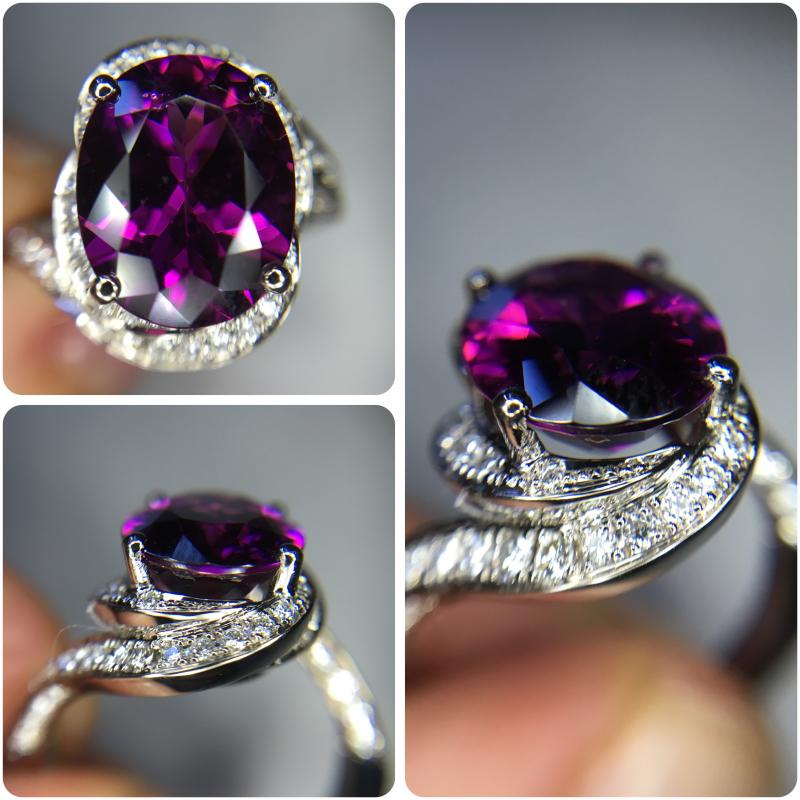
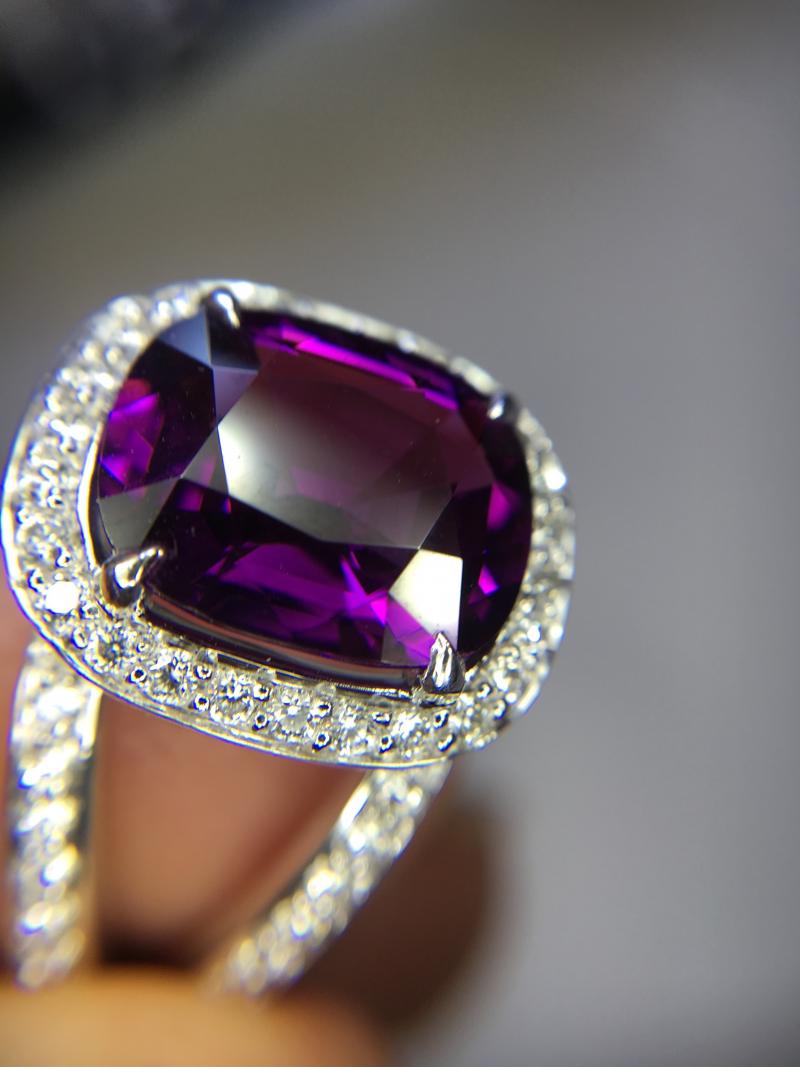
Meaning and history
The name comes from the medieval Latin granatus, “pomegranate”, a reference to its red colour. Used since the Bronze Age as a gem and an abrasive, it adorned the necklaces of the pharaohs.
In Rome, signet rings carried garnet intaglios used to seal important documents in wax. In the Middle Ages, clergy and nobility favoured red garnet.
OriginS
Bohemia (today’s Czech Republic) supplied the pyropes so popular in Victorian times. Today Africa produces much of the world’s garnet: demantoid from Namibia; tsavorite from Kenya, Tanzania and Madagascar; spessartine from Namibia and Tanzania. Garnets are also found in Myanmar, Brazil, Iran, Afghanistan, Pakistan, India and Sri Lanka.
Hardness & Care
6.5 to 7.5 on the Mohs scale, so more fragile than ruby, sapphire or diamond. Ideal for earrings, brooches and pendants. Store it separately: harder stones can scratch it, and it can scratch opals and pearls.
Clean with warm soapy water and a soft brush. Ultrasonic cleaning is usually safe unless the stone is fractured or treated; avoid steam.
Virtues
Traditionally, garnet is said to bring strength, energy, courage and joy. A grounding stone, it is associated with willpower, self-confidence and success, and is believed to help overcome discouragement.
The ideal metal to go with garnet
For pyrope garnet:
- White gold or platinum: a modern look that makes the stone the centre of attention through contrast.
- Yellow gold: a classic, glamorous touch that brings out orange and brown tones for a regal, antique feel.
- Rose gold: a bold vintage charm that warms the piece and suits every skin tone.