Description
Tourmaline has one of the widest colour ranges in the gem world: it comes in every colour of the rainbow. A few varieties:
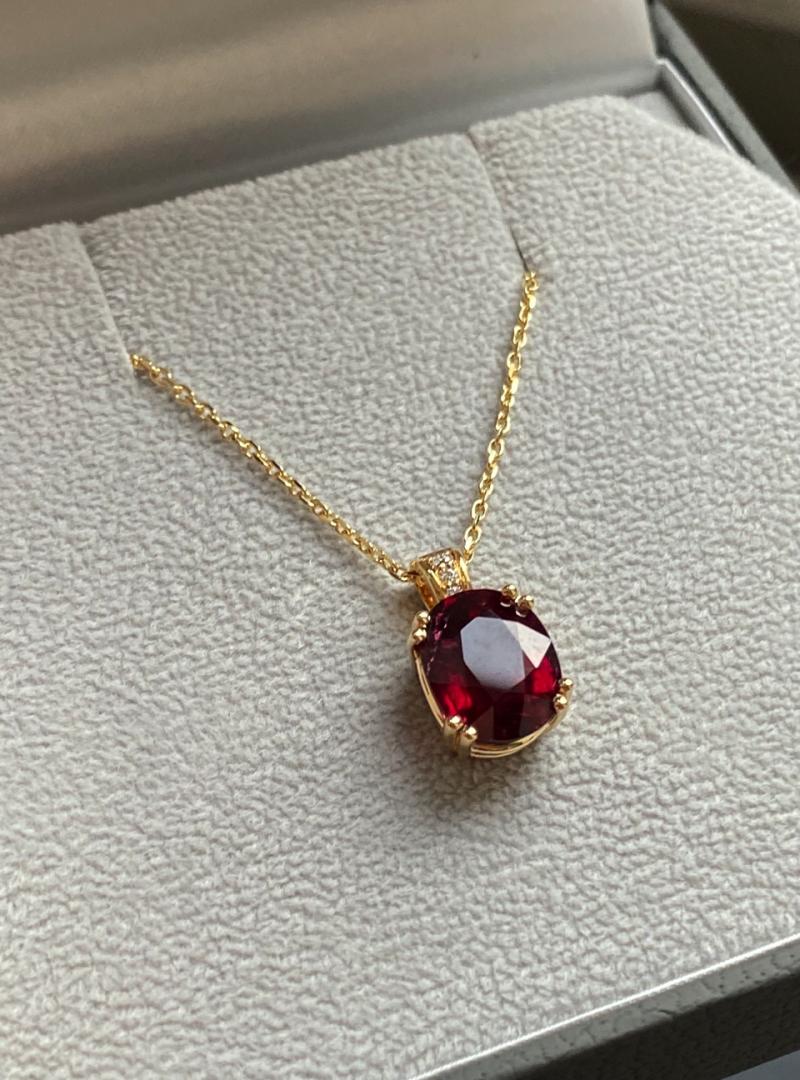
• Rubellite: pink, red, purplish red or orangey red;
• Indicolite: dark violet-blue, blue or greenish blue;
• Paraíba: intense turquoise-blue to green, almost electric, known as “neon blue”. Its colour comes from copper and manganese; first found in the state of Paraíba, Brazil, it is very rare and valuable;
• Chrome tourmaline: intense green, coloured mainly by vanadium, like many Brazilian and African emeralds;
• Bicolour tourmaline: several colours in one stone, often green and pink;
• Watermelon tourmaline: pink in the centre, green outside, often cut in slices to show the pattern.
Some tourmalines show a cat’s-eye effect (chatoyancy), caused by fine tube-like inclusions; they are then cut as cabochons.
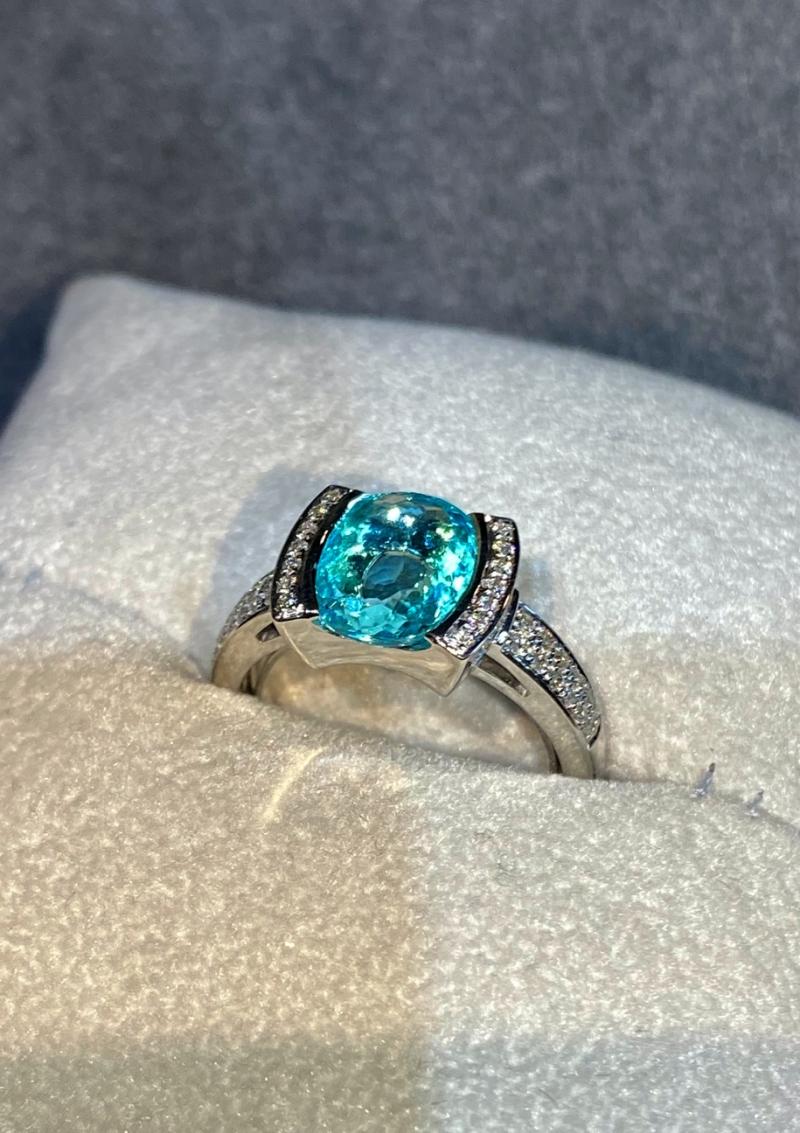
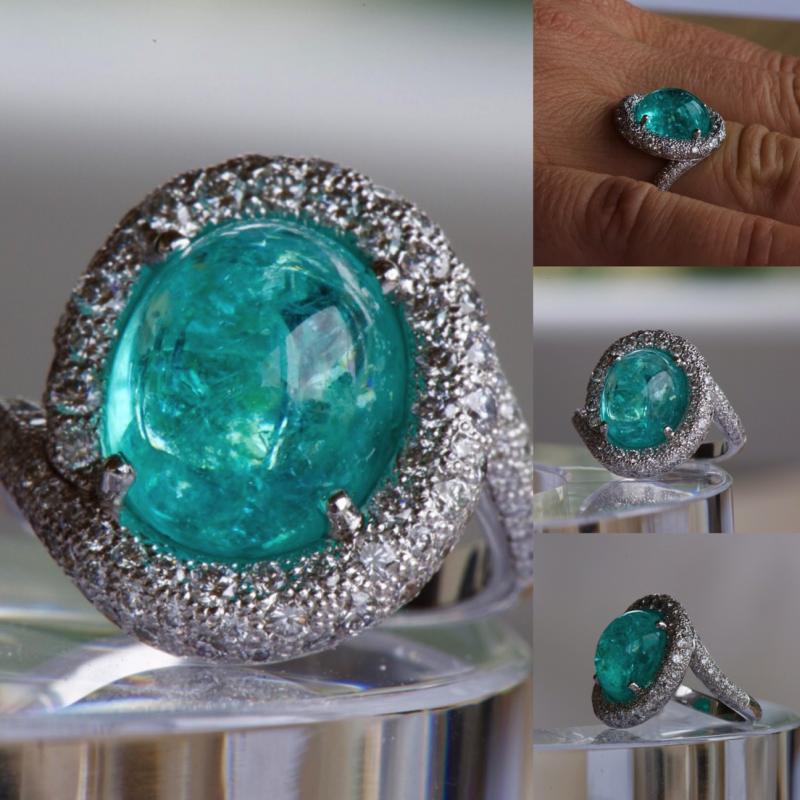
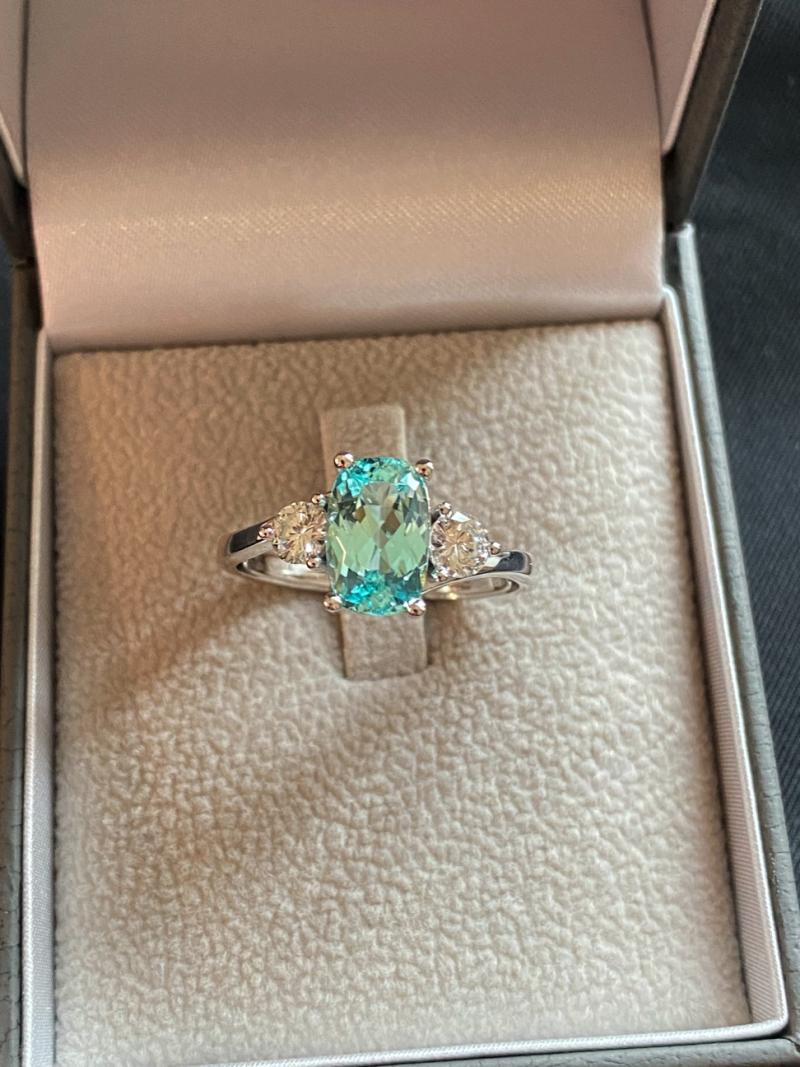
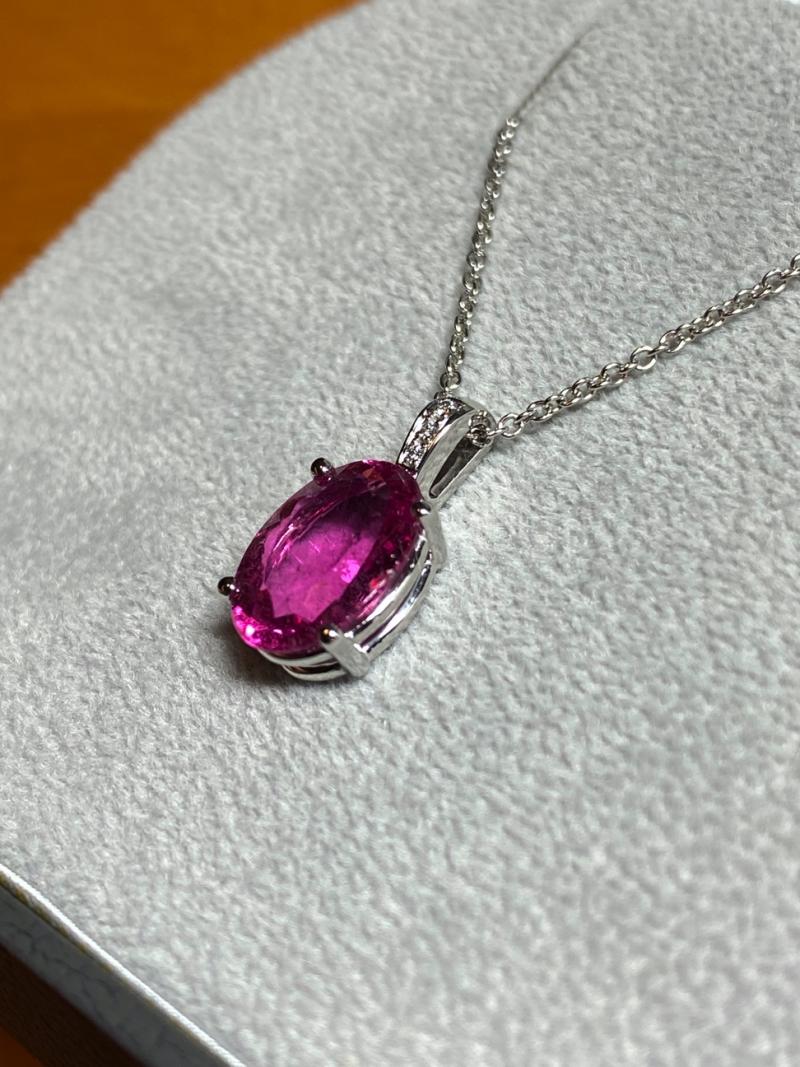
Meaning and history
Its name comes from the Sinhalese turmali, used by Sri Lankan miners for the island’s coloured stones; Dutch merchants brought it to Europe. Legend says tourmaline fell from the sky through a rainbow, which gave it its thousand colours.
Known since Antiquity, it was long confused with other gems.
In the 16th century, a conquistador mistook a green Brazilian tourmaline for an emerald, sparking a rush for these “emeralds”.
In the 18th century, the Dutch used its pyroelectric properties to clean their pipes: when heated, it attracted ash.
Only in the 19th century was it recognised as a species in its own right.
OriginS
Brazil, Burma, Afghanistan, Australia, Russia, Thailand, Angola, Tanzania, Nigeria, Kenya, Madagascar, Malawi, Mozambique, India and the United States.
Hardness & Care
7 to 7.5 on the Mohs scale: well suited to jewelry, even for everyday wear. Clean with warm soapy water and a soft brush; avoid ultrasonic cleaning for fractured stones.
The ideal metal
Depending on its colour, it suits warm and cool tones alike: white, rose or yellow gold, or platinum.
Virtues
Traditionally, each colour has its own virtues; in general, tourmaline is considered calming and balancing.