Description
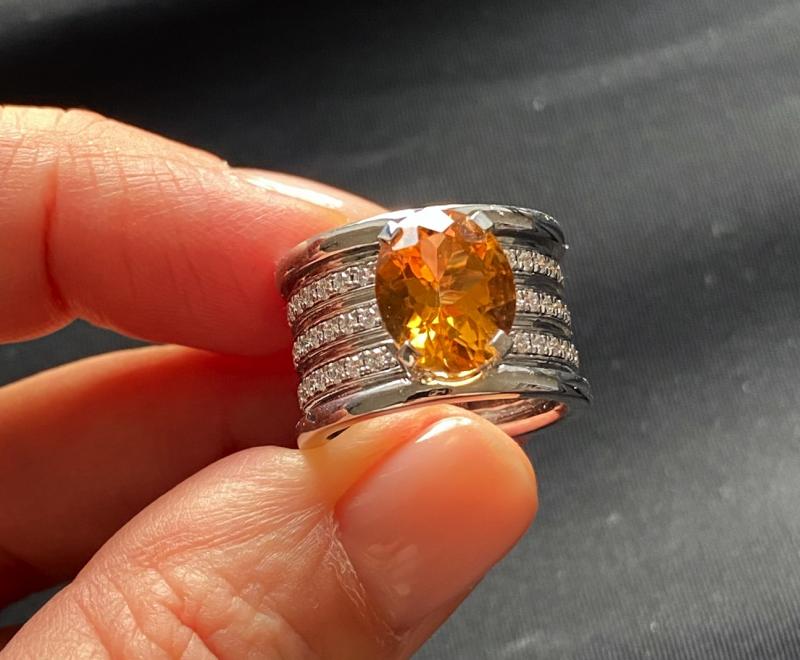
Citrine is named after the lemon (citron in French), for its colour. It is a quartz, often found in the same deposits as amethyst, and coloured by iron. Ametrine combines the two: amethyst’s purple and citrine’s yellow. Its palette ranges from lemon and golden yellow to tangerine orange and “Madeira” red, named after the wine.
Significance and history
Already popular in ancient Greece, citrine was used by the Romans for intaglios and cabochons. A lucky stone, it was believed to protect against the evil eye and snake bites. Highly fashionable in the 19th and 20th centuries, notably with Art Nouveau artists such as René Lalique, it became November’s birthstone relatively late.
OriginS
Mainly Brazil, Madagascar, Mozambique and Uruguay; multicoloured citrine and ametrine come from Bolivia. Lemon-yellow citrine is also found in Zambia and Tanzania.
Hardness & Care
7 on the Mohs scale, which makes it widely used in jewelry, as well as in cabochons and tumbled stones. Some shades fade under UV light: avoid unnecessary exposure to strong light.
Virtues
Traditionally, sunny citrine is associated with happiness and prosperity.
The ideal metal
• White gold or platinum: a modern look that makes the stone the centre of attention through contrast.
• Yellow gold: a classic, glamorous touch, perfect for an evening piece, bringing out its orange tones.